The First 24 Hours After Water Damage: A Arvada Homeowner's Checklist
Hour one is about the source: main shutoff or appliance valve, power off to wet rooms if water is near outlets, and phone photos of everything before it moves. Insurers and adjusters work from documentation, and the first hour is when the documentation is honest.
The first day in an Arvada basement is source, entry, and log: shut the water off if a line is feeding, photograph every entry line, sump pit, window well, wall base, before pumping, and start the meter log the same day. On bentonite clay the ground under the house is part of the story, so the first notes record the weather and the soil's state along with the fixtures, because the claim and the drying plan both read them later.
Hours two to six are extraction territory. Standing water does not wait politely: it wicks up drywall roughly an inch an hour at first and runs under flooring along the subfloor. A shop vac handles a spill; a room of water needs truck-mounted or portable extraction and then real drying equipment, not a box fan.
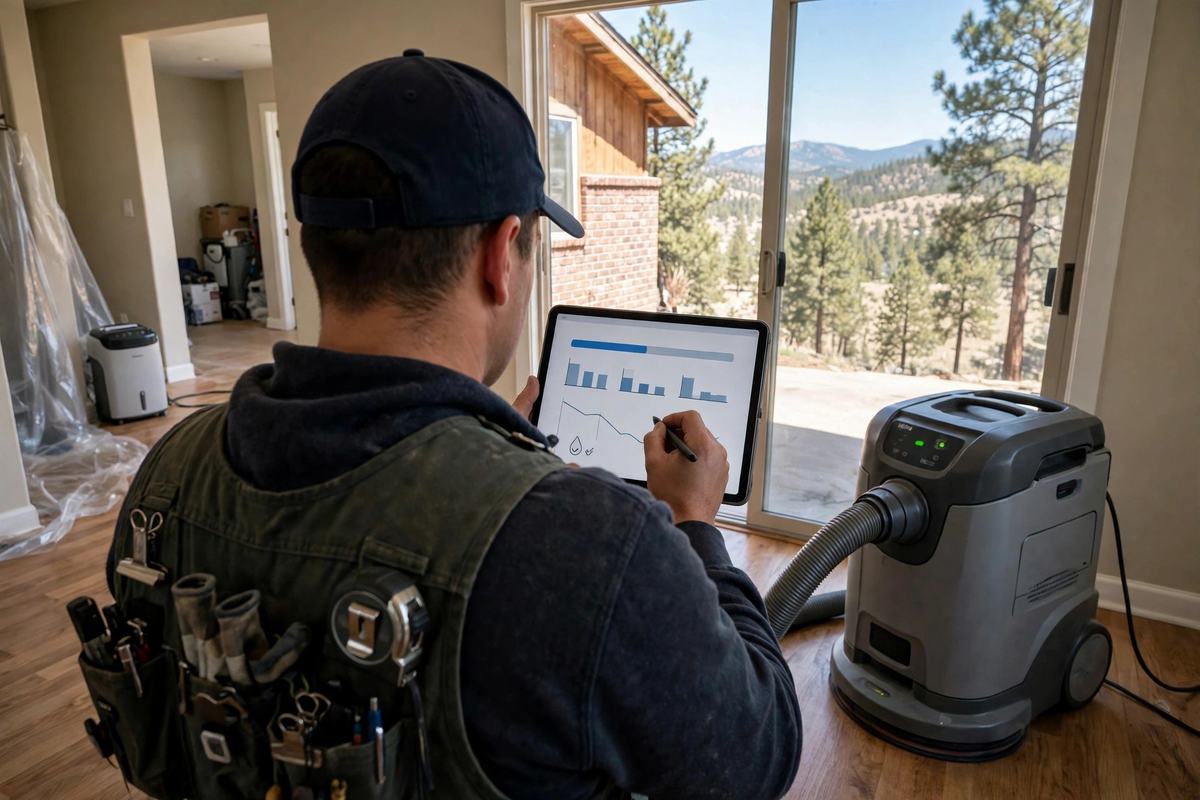
By hour twenty-four the question changes from 'is it wet' to 'what is still wet.' Moisture meters, not fingertips, answer that. If a contractor cannot show you readings, the drying is a guess - and guesses are how mold shows up in month two.
Request a callback
Prefer to talk later? Leave your details and an independent local pro will call you back. No charge to you, no obligation.
Van Bibber Creek Restoration is a free referral service. Submitting this form connects you with independent local contractors who provide the work.